Getting Started
This guide walks you through the steps required to get Outreach running for your organisation, from initial access through to channel configuration and first campaign readiness.
Who Uses Outreach
Outreach has two primary user roles:
- Org Admin: responsible for requesting access, configuring delivery channels, and managing the organisation's Outreach settings
- Campaigner: responsible for creating, running, and monitoring campaigns
For a detailed breakdown of permissions, see Roles and Permissions.
Architecture
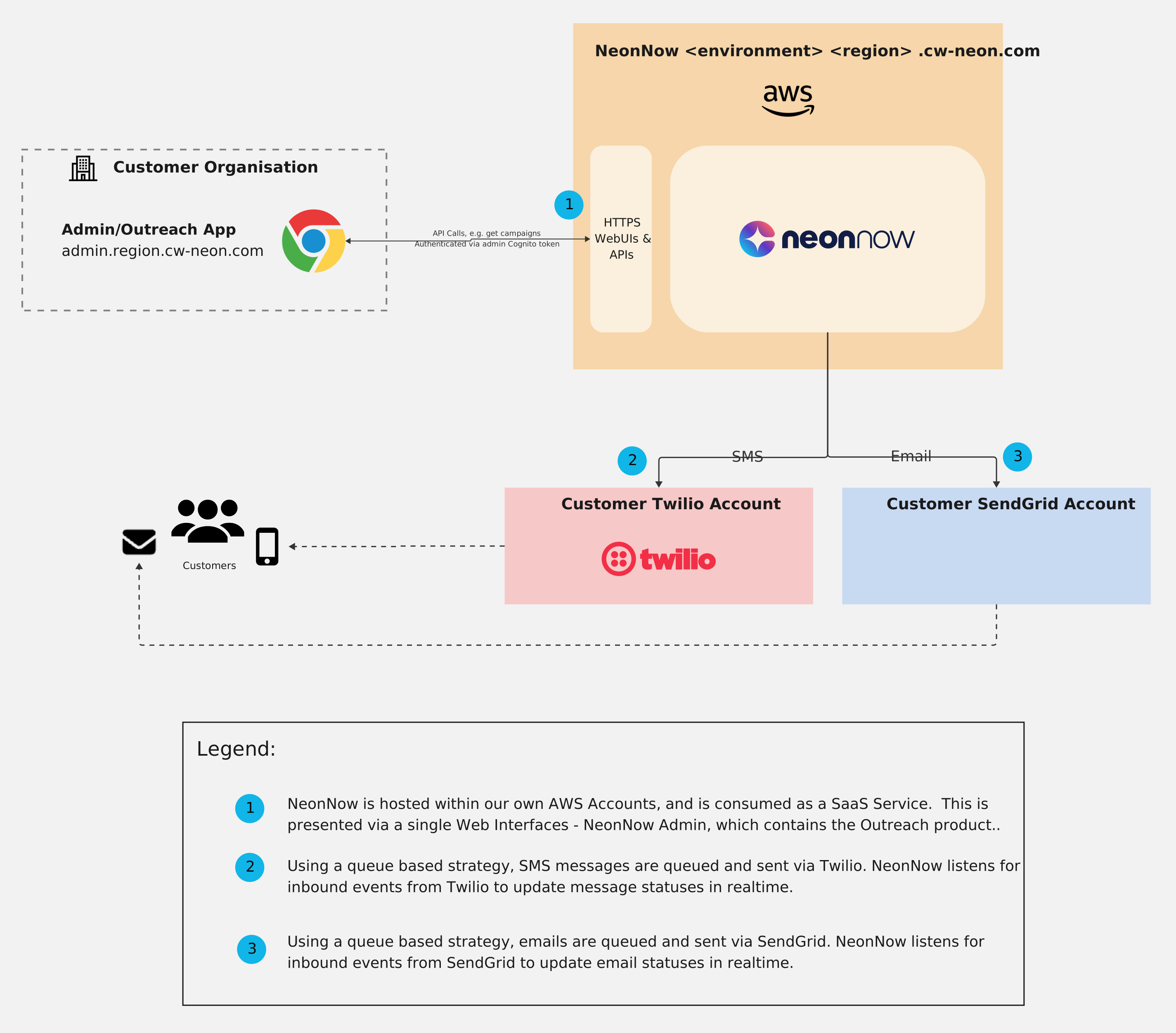
The following diagram shows how Outreach integrates with your organisation, including how campaigns are delivered through Twilio (SMS) and SendGrid (Email).
(To expand the image, right click, 'Open image in new tab').
Step 1: Request Outreach Access
Outreach is an add-on product that must be enabled for your organisation before it can be used.
- Log in to the Admin app as an Org Admin.
- Navigate to Outreach in the sidebar.
- On the Outreach product landing page, select Request Access.
- Your request is submitted to the NeonNow team for review.
While the request is being processed, the landing page shows a "Requested" state. Once your request is approved and activated, the landing page updates to show the full Outreach interface.
Only Org Admins can request Outreach access. Campaigners who navigate to Outreach before it is enabled will see a landing page prompting them to contact their Org Admin.
Step 2: Configure at Least One Delivery Channel
Before any campaigns can be created, at least one delivery channel must be configured in Outreach Settings.
For SMS
You need a valid Twilio integration:
- Go to Outreach → Settings → SMS.
- Enter your Twilio Auth Token and Messaging Service SID.
- The system validates the credentials against the Twilio API before saving.
See SMS Configuration for step-by-step instructions.
For Email
You need a valid SendGrid integration:
- Go to Outreach → Settings → Email.
- Enter your SendGrid API Key.
- Once the key is saved, add at least one verified domain or verified sender email.
See Email Configuration and Domains and Senders for step-by-step instructions.
Minimum Requirements
| Channel | Minimum to create a campaign | Minimum to run a campaign |
|---|---|---|
| SMS | Valid Twilio auth token | Valid Twilio auth token |
| Valid SendGrid API key | Valid SendGrid API key + at least one verified sender |
Step 3: Prepare Your Campaign Materials
Before creating a campaign, make sure you have:
- A CSV file with recipient data (phone numbers for SMS, email addresses for Email)
- Message content ready, or a plan for what you want to say
- Opt-out language (SMS) or unsubscribe link (Email) included in your template
- For email: your sender identity (From email, Reply-to email, Subject line)
Step 4: Create Your First Campaign
Once access is enabled and a channel is configured, any user with the Campaigner or Org Admin role can create and run campaigns.
Follow the Quickstart for a step-by-step guide to your first campaign.
Core Rules and Limits
| Rule | Detail |
|---|---|
| CSV upload | Up to 300,000 rows and 50 MB per file |
| Campaign channel | Single channel per campaign (SMS or Email), cannot be changed after creation |
| Concurrent runs | One active campaign per channel type at a time (one SMS + one Email can run simultaneously) |
| Email attachments | 20 MB total per template |
| Test emails | Up to 10 recipients per test send |
Next Steps
- Quickstart. Create and run your first campaign
- Admin Overview. Configure channels and settings
- Campaigns Overview. Understand the campaign lifecycle
- Roles and Permissions. See what each role can do